
What a Broken Garage Door Spring Looks Like and When to Call a Pro
A garage door spring usually breaks without warning. One moment the door works like normal, and the next there is a loud bang from the garage, the opener strains, or the door refuses to lift.
That sound catches many homeowners off guard because a broken spring can be easy to miss at first. The opener may still hum. The wall button may still click. The door may even move a few inches. But the spring is the part doing most of the heavy lifting, and when it fails, the entire door system becomes unsafe.
The safest move is simple: do not force the door open or closed. First, learn what a broken spring looks like. Then call a trained garage door professional to handle the repair.

Why garage door springs matter so much
A garage door can weigh a few hundred pounds, depending on its size, material, insulation, and windows. The opener is not designed to lift all that weight by itself. The spring system balances the door so it can move smoothly.
When the spring is working, the door feels much lighter than it really is. That is why a properly balanced door can often be lifted by hand with reasonable effort after disconnecting the opener.
When a spring breaks, that balance disappears. The door becomes extremely heavy. The opener may try to lift it, but it is now carrying a load it was not built to handle. That can damage the opener, bend parts of the door, or leave the door stuck halfway.
There are two common spring types found in residential garages.
Torsion springs sit above the garage door opening on a metal shaft. They twist to store and release energy as the door moves.
Extension springs run along the horizontal tracks on both sides of the door. They stretch and contract as the door opens and closes.
Both types are under high tension. That stored energy is why broken spring repair is not a regular household fix. It is a job for someone with the right tools, training, and parts.
What a broken torsion spring looks like
A torsion spring is the long, tightly wound coil mounted above the garage door. Most double-car garage doors have one or two torsion springs on a metal shaft.
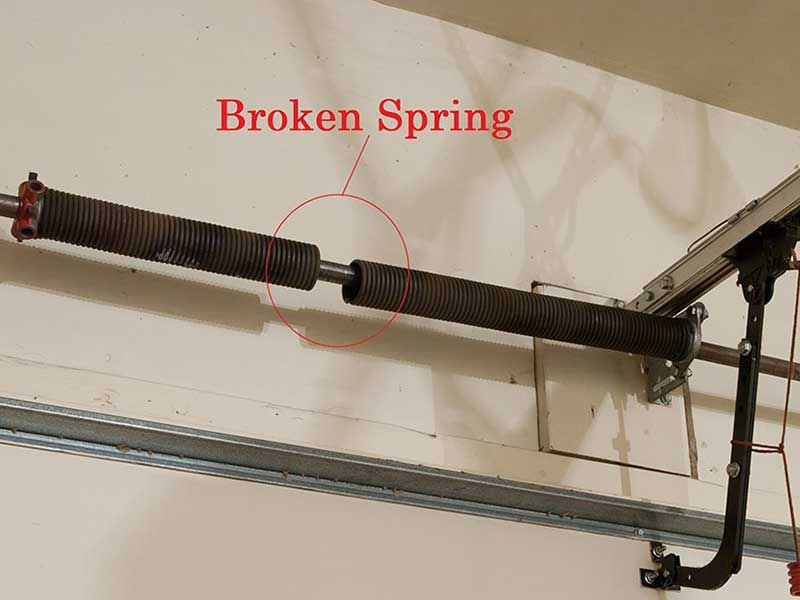
When a torsion spring breaks, the most common visual clue is a gap in the coil.
A healthy torsion spring looks continuous from end to end. The coils sit close together. When it snaps, the spring separates, leaving a space somewhere along the coil. That gap is often a couple of inches wide, though the exact size can vary.
Look above the closed garage door. If the spring has split into two sections, it is broken.
Other signs may include:
A spring that looks uneven or stretched in one spot
A visible separation near the middle of the coil
Loose or shifted spring hardware on the shaft
A door that will not lift even though the opener runs
A loud pop or bang from the garage
That bang can sound like something hit the wall, a box fell off a shelf, or a firecracker went off inside the garage. Many homeowners in Kaysville, Layton, and Farmington notice broken springs during colder parts of the year because metal parts can be less forgiving after temperature swings. The weather does not need to be extreme for an older spring to fail.
Do not touch the spring to confirm it is broken. A visual check from a safe distance is enough. If there is a gap, stop using the door and call for service.
What a broken extension spring looks like
Extension springs are mounted along the sides of the garage door, usually above the horizontal tracks. They stretch when the door closes and contract when the door opens.
A broken extension spring may look different from a broken torsion spring. Instead of a clear gap in a coil above the door, you may notice one side spring hanging loose, stretched out, or separated.
Common signs include:
A spring dangling near the track
One spring longer than the other
A pulley or safety cable hanging out of place
A crooked door that rises unevenly
A loose cable near the side of the door
A sudden slam when the door tries to close
Extension springs should have safety cables running through them. These cables help control the spring if it breaks. If the spring snaps and there is no safety cable, parts can whip around the garage with serious force.
That is one reason older extension spring systems deserve extra caution. If anything looks loose, stretched, or out of line, leave the door alone.
Other signs the spring has broken
Sometimes the spring damage is not obvious from the doorway. The door behavior can tell the story.
The garage door feels too heavy
If the opener is disconnected and the door feels impossible to lift, the spring may be broken. A balanced garage door should not feel like dead weight.
Do not test this by straining. If the door will not move with normal effort, stop. Forcing it can cause injury or damage the panels.
The opener hums but the door barely moves
A garage door opener is often blamed first, but the spring may be the real problem. The opener may hum, click, or move the door a few inches before stopping.
This happens because the opener is trying to lift a door that is no longer counterbalanced. Continuing to press the button can strip gears, bend the rail, or burn out the motor.
The door opens a few inches and stops
Many automatic openers have safety settings that stop operation when the door is too heavy. If the door rises only a few inches, then reverses or stops, a broken spring is a strong possibility.
This is especially common with torsion spring failures.
The door closes too fast
A working spring helps control the door’s weight in both directions. If the spring fails while the door is open or partly open, the door may drop quickly.
A fast-closing garage door is dangerous. Keep people, pets, vehicles, and stored items away until it is repaired.
The door looks crooked
A broken spring or cable can make one side of the door move differently than the other. The door may tilt, bind in the tracks, or leave an uneven gap near the floor.
A crooked door can come off track if forced. Stop using it right away.
The cables look loose or tangled
Loose cables often appear near the lower corners of the door or along the track. They may look like they have slipped off the drum or fallen slack.
Cables can come loose when a torsion spring breaks because the system loses tension. Do not try to rewind or reset them. Cable and spring repairs are closely connected, and both can be dangerous.
What not to do when a spring breaks
A broken spring turns a garage door into a heavy, unpredictable object. The door may look stable while still being unsafe.
Avoid these common mistakes.
Do not keep pressing the opener button.
The opener may continue trying to lift the door, but that can damage the opener and create more strain in the system.
Do not pull the emergency release unless the door is fully closed.
The red emergency release cord disconnects the opener from the door. If the door is open or partly open, releasing it can cause the door to fall.
Do not try to lift the door alone.
A full-size garage door can be much heavier than expected. If it slips, there may not be time to get out of the way.
Do not remove spring hardware.
Brackets, set screws, cables, drums, and pulleys may still hold tension. Loosening the wrong part can release energy suddenly.
Do not replace only one spring without asking about the full system.
On a two-spring door, both springs usually have similar wear. If one has failed, the other may be near the end of its life. A pro can inspect the pair and recommend the safer repair.
The best short-term step is to keep the door closed if possible, secure the area, and schedule service.
Why calling a pro is the safer choice
Garage door springs store a lot of energy. Repairing them involves winding, tensioning, measuring, and securing parts that can cause serious injury if handled incorrectly.
A trained technician brings more than a replacement spring. They also bring the correct winding bars, knowledge of spring sizing, and an understanding of how the whole door system should balance.
A professional repair should include more than swapping out the broken part. The technician should check:
The correct spring size and cycle rating
The balance of the door after installation
Cables, drums, rollers, bearings, and hinges
Track alignment and door movement
Opener strain and travel settings
Safety features, including photo eyes and auto-reverse
That matters because a spring often breaks after years of wear. Other parts may be worn at the same time. Replacing the spring without checking the system can leave the door noisy, shaky, or unsafe.
For homeowners in Davis County areas like Kaysville, Layton, and Farmington, a local technician may also understand common regional issues, such as seasonal temperature swings, road dust, and everyday wear from attached garages that serve as the main entrance to the home.
When to call right away
Some garage door problems can wait a day or two. A broken spring should not be treated casually, especially if the door is open, crooked, or blocking a vehicle.
Call a garage door professional right away if:
The spring has a visible gap or separation
The door will not open
The door is stuck halfway
The door slammed shut
The door looks crooked or uneven
Cables are loose, tangled, or hanging
The opener strains, hums, or stops after a few inches
The door feels much heavier than normal
There are children, pets, or parked vehicles near the door
If the garage door is the main entrance into the home, mention that when scheduling. Also say whether the door is fully closed, partly open, or stuck with a vehicle inside. That helps the technician understand the urgency and bring the right parts.
What information helps before service
A little information can make the appointment smoother. You do not need to diagnose everything. Just observe from a safe distance.
If possible, note:
Whether the door has torsion springs above the opening or extension springs along the tracks
Whether there is one spring or two
The door size, such as single-car or double-car
Whether the door is wood, steel, insulated, or has windows
What happened before the issue started
Whether a loud bang was heard
Whether the opener still runs
Photos can help too, as long as they are taken safely. Stand clear of the door path and do not climb, pull cables, or touch the spring.
If the door is stuck open overnight, ask the repair company what to do while waiting. They may recommend leaving it alone until a technician arrives, especially if the door is unstable.
How to reduce the chance of another spring surprise
Garage door springs wear out through use. Every open and close cycle adds wear. No spring lasts forever, but regular care can help the whole system run better and may catch problems before a sudden failure.
A few practical habits help:
Listen for new grinding, squeaking, or popping sounds
Watch for jerky movement or uneven travel
Keep the track area clear
Do not hang items from the tracks or spring shaft
Schedule a professional inspection if the door gets noisier or heavier
Have both the door balance and opener settings checked after a spring replacement
Some homeowners use the garage door more than the front door. In that case, the spring cycles add up faster. If the door opens and closes many times a day, routine inspection becomes more useful.
Lubrication may help certain moving parts, but it will not fix a broken spring or restore lost spring tension. Use products only as recommended for garage doors, and avoid spraying random household lubricants on every part of the system.
The clear takeaway
A broken garage door spring often shows up as a visible gap in a torsion spring, a loose or stretched extension spring, a door that feels too heavy, or an opener that runs without lifting the door. It may also announce itself with a loud bang from the garage.
Once that happens, stop using the door. Keep people and pets away from the area. Do not touch the spring, cables, drums, or brackets. The safest next step is to call a qualified garage door professional who can replace the spring, balance the door, and check the rest of the system before anyone uses it again.